

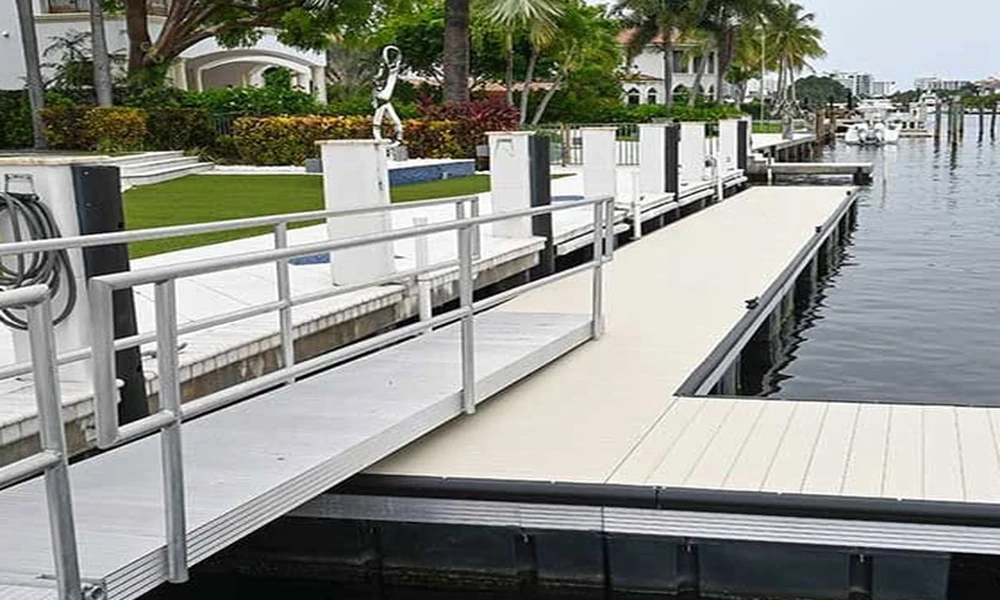
A residential floating dock can make waterfront access much easier, but planning one involves more than simply choosing a size and putting it in the water.
Every property is a little different. Water depth can change. Shorelines have different shapes. Access from the home to the water may also affect the design.
Because of this, a floating dock should be planned around the property and how the owner expects to use it.
Supreme Floating Docks works with residential floating docks and considers factors such as shoreline conditions, water depth, anchoring, access, and intended use when planning a dock system.
Why Do Shoreline Conditions Matter?
The shoreline is usually one of the first things to think about.
Some waterfront properties have a fairly direct path to the water. Others may have slopes, seawalls, vegetation, or other features that affect where a dock can be positioned.
The connection between land and dock matters too.
Property owners need a practical way to move between the shoreline and the floating platform. This is where access planning, including the placement of a gangway or other connection, can become important.
A design that works well for one property may not make sense for the house next door.
How Does Water Depth Affect a Floating Dock?
Water depth is another major part of planning.
A floating dock moves with the water rather than remaining at one fixed height. That is one reason these systems can work well in waterfront environments where water levels change.
Still, the conditions around the dock need to be understood.
Water depth can affect where the dock is placed, how people use it, and how the system is anchored. Changes in water level may also influence access between the shore and the dock.
Looking at these conditions early can help create a more practical layout.
Why Is Anchoring Important?
A floating dock needs a way to remain positioned while still being able to move with changing water conditions.
There are different ways a floating dock may be anchored, and the right approach can depend on the site.
That is why anchoring should not be treated as an afterthought.
Shoreline layout, water depth, intended use, and local site conditions can all play a part in determining what needs to be considered during planning.
How Will the Dock Be Used?
This sounds simple, but it can shape the entire project.
One homeowner may want a dock mainly for getting into a small boat. Another may want space for sitting near the water. Someone else may need easier access for kayaks, paddleboards, or other waterfront activities.
Those uses may call for different layouts.
Thinking about daily use before choosing the dock configuration can help avoid a setup that technically fits the property but does not fit the owner’s routine.
Why Does Access Need to Be Planned Early?
A floating platform is only useful if people can comfortably reach it.
The route from the property to the dock should be considered along with the dock itself. This may include shoreline access, gangway placement, and how changing water levels affect the connection.
It is easy to focus mostly on the floating section. But, really, the transition from land to water can be just as important to the overall experience.
Planning Around the Property
Residential floating docks are not one-size-fits-all structures.
A useful design starts with the waterfront itself. Shoreline conditions, water depth, anchoring, access, and intended use can all influence the final layout.
Supreme Floating Docks provides residential floating dock solutions built around these kinds of site considerations. For waterfront property owners, taking time to understand the site before choosing a layout can make the planning process clearer and help create a dock that fits the way the property will actually be used.
