

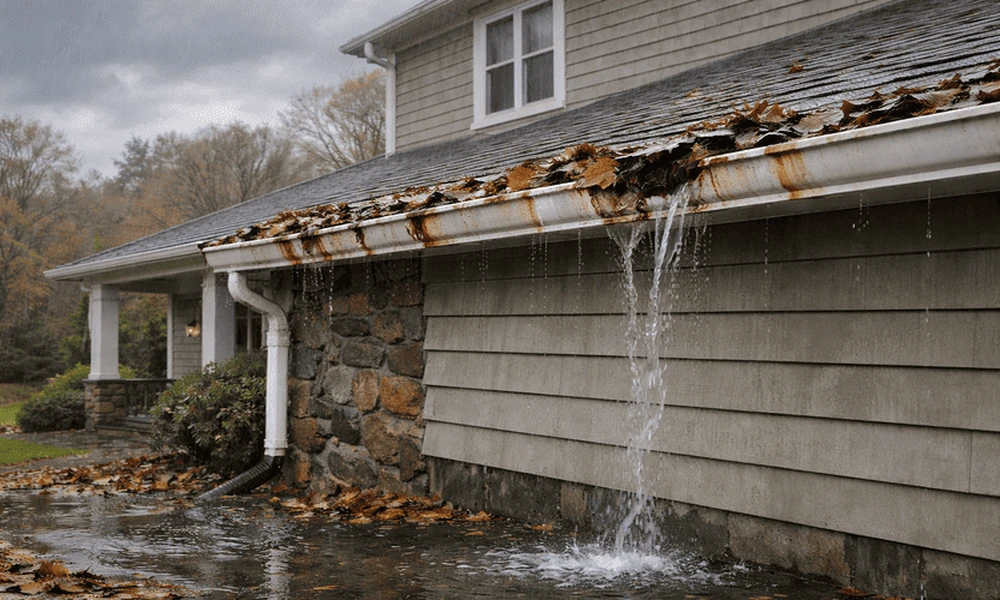
A roof is essentially a large funnel. An average suburban roof collects a surprising amount of water in even a moderate storm, and the gutter system is supposed to carry all of it several feet away from the house. When gutters clog, that water doesn’t vanish. It spills over the front edge, backs up under the roof edge, or drops straight down beside the foundation. Where it ends up decides whether a clog is a minor chore or the beginning of a costly repair.
In Arvada, that question carries extra weight because of what lies beneath many homes. Much of the Front Range sits on expansive clay soils, some rich in bentonite, which swells noticeably when wet and shrinks as it dries. Water pouring from an overflowing gutter onto the same patch of soil can raise and drop the ground under a foundation corner, leading to cracked basement walls, heaved slabs and sticking doors. Colorado’s frequent freeze and thaw cycles, sudden chinook warmups and heavy spring snows add ice and weight to the problem. All of this makes the fall cleanout, done after most leaves have dropped and before temperatures stay below freezing, one of the more valuable routine jobs on a Front Range home.
Hitting that timing is easier when the job is already on the calendar, and fall slots fill quickly once leaves start coming down. Deja View Window Washing is a small, local company based in Arvada that has served the Denver Metro since 2010. Its Arvada Gutter Cleaning service goes beyond scooping debris: the crew flushes downspouts so water actually moves through the whole system. The company is licensed and carries both general liability and workers’ comp, and it serves homes and businesses alike. Since holiday lights often hang from gutter lines, many clients pair a fall cleanout with light installation, window washing or solar panel cleaning in one visit. Estimates are free, first time customers get 10 percent off, and the office is open weekdays from 8 AM to 5 PM.
What fills Arvada gutters through the year
Gutters here don’t clog only in autumn. Different debris arrives in different seasons, and knowing the pattern shows why a single yearly cleaning often isn’t enough for homes near mature trees.
| Time of year | Main debris | What it does in the gutter |
|---|---|---|
| Late spring to early summer | Cottonwood fluff, elm seeds, maple helicopters | Mats into a dense layer that holds water and blocks downspout openings |
| Summer | Roof granules, dust, hail debris | Settles as gritty sludge; heavy granule loss can signal shingle wear |
| Summer storms | Twigs, small branches, wind blown trash | Creates dams that trap everything behind them |
| Fall | Leaves from ash, maple, linden and oak, plus pine needles | Fills troughs quickly and packs into downspout elbows |
| Winter | Ice and compacted snow over leftover debris | Adds weight, causes overflow during melts, can pull gutters loose |
Where the water goes when the system fails
Following the overflow shows which part of the house takes the damage.
Straight down at the foundation. This is the biggest concern on expansive soil. Water spilling over the gutter edge or from a short downspout soaks the soil right beside the foundation wall. Beyond the heaving risk, saturated soil can push moisture through basement walls and window wells. Downspouts should discharge several feet from the house, often five or more, onto ground that slopes away.
Back under the roof edge. A packed gutter can hold water against the fascia board and drip edge. Over time, wood fascia softens and rots, soffits stain, and water can reach the roof deck. Aluminum gutters fastened into rotting fascia eventually lose their grip.
Into ice. Water sitting in a clogged gutter freezes overnight. On sunny days, snowmelt runs down the roof, meets that ice, and refreezes at the edge, which builds ice dams and heavy icicles. A gutter packed with frozen debris and ice can weigh many times its normal load, enough to bend hangers and pull sections away from the house.
Across hard surfaces. Overflow onto driveways, sidewalks and steps freezes into slick patches in winter. Repeated wetting of soil under concrete slabs also contributes to the heaving and cracking common in older Arvada neighborhoods.
Signs the system needs attention now
Some problems are visible from the ground, no ladder needed:
- Water sheeting over the front of the gutter during rain rather than coming out of the downspouts
- Plants or grass sprouting from gutter troughs
- Lines of dark staining on siding or brick directly below the gutter
- Gutters sagging between hangers or pulling away at the seams
- Piles of shingle granules at the bottom of downspouts, especially after hailstorms
- Soil erosion or small holes washed out in beds beside the foundation
The truth about gutter guards
Gutter guards have become one of the most heavily marketed home upgrades, and micro mesh styles are especially popular right now. They do cut down on large leaves. They aren’t maintenance free. Pine needles, cottonwood fluff and fine roof granules can mat on top of or inside mesh, and seed pods can wedge into openings. In winter, some guard styles let snow and ice build on the surface, sending meltwater over the edge instead of into the trough. Homes with guards generally still need periodic checks and cleaning, though less often and with a different technique.
Downspouts are the part most people skip
A clean gutter trough doesn’t help if water can’t exit. Downspouts clog at the elbows, where debris collects at the bend, and at underground connections that tie into buried drain lines. Flushing each downspout with water confirms flow all the way through. Buried extensions deserve attention in particular, because a clog there backs water up the downspout without any visible sign until it overflows or splits a seam.
Timing and frequency for Front Range homes
Twice a year covers most homes. The first cleaning comes after cottonwood and seed season in late spring or early summer. The second comes after leaf drop, usually late October into November. Homes under large trees or pines may need a third visit. The fall cleanout matters most, since whatever sits in the gutters then will freeze in place. A dry, clear gutter system going into winter is one of the simplest protections a Colorado home can have for its foundation, roof edge and walkways.
