

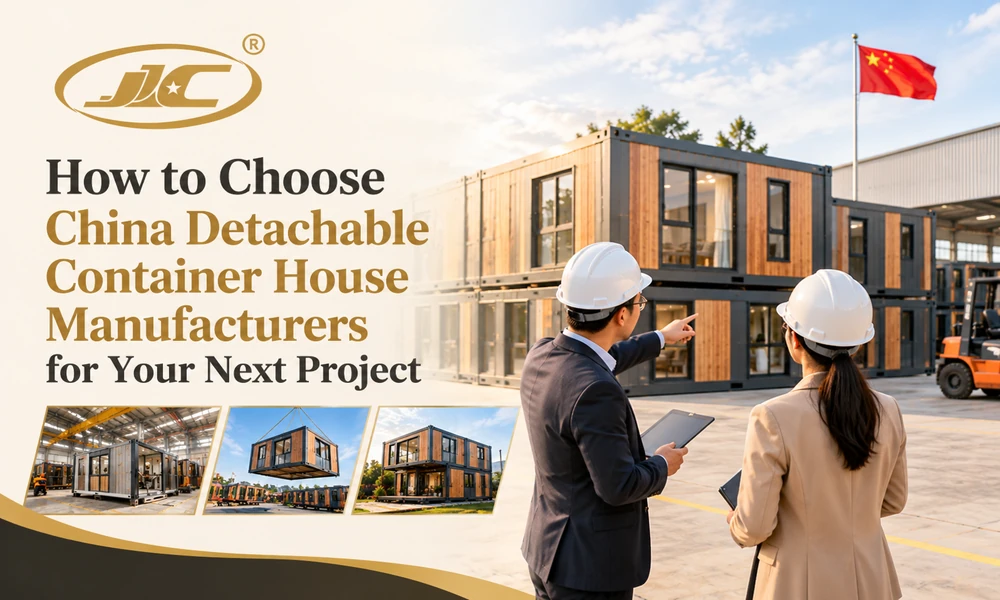
A container house order can appear flawless on the surface but cause trouble besides delivery. The design might not be compatible with the location, the panels may not be appropriate for the weather conditions, or the price provided might ignore important expenses. If you know which supplier to work with before the production starts, all these problems can be avoided.
China detachable container house manufacturers provide factory direct buildings in various dimensions and styles for importers, builders, property developers, and wholesalers. It should, however, be noted that not all suppliers provide the same quality, service, and customization. A thorough analysis of their items and also processes can enable customers to discover a manufacturer that complements their job.
Starting from the Project, Not the Product Catalogue
A short project brief should be done before reaching out to the factory. This provides suppliers with the information they need to submit an effective quote.
Suppose there is a company who needs 30 units for patrol on a construction site. Units must include sleeping areas, washrooms, and storage. They must also be simple enough to relocate once the project finishes.
Another purchaser might need something like a small office reuse at multiple sites. Both buyers have similar desires for detachable buildings, but requirements differ.
Your project brief should cover:
- Use: Home, office, flat, or storage.
- Amount: A building or a macro batch.
- Site conditions: Climate, type of land, subsoil under the ground, accessibility, and space usages.
- Internal requirements: Spaces, bathrooms, windows, electric points, and insulation.
- Future use: If it could need to be relocated or expanded.
Once all these details are clear, container home manufacturers in china can recommend designs that suit the purpose without sending you your price list.
You are Educated on the Product from Factory Floor to Job Site
One of the best ways to evaluate any supplier is through the entire production chain. Any step has the potential to make or break the end result.
Stage 1: Design and drawings
The manufacturer is expected to develop drawings that depict the size, outline, casing, doors, and windows. Also, the various form and connection areas of the building. These are the drawings that you need to approve before going into production.
In case of a custom layout, inquire if the change influences pricing or lead time. Always confirm everything you have agreed in writing.
Stage 2: Material selection
Inquire regarding which materials will be used to create the frame, roof, walls, and floor. Learn how to rustproof steel parts. Inspect also the type and thickness of insulation.
An enclosure for a hot climate must vary in insulation and ventilation compared to one located in a cold region. What are you going to make it out of? The materials need local climate and building regulations.
Stage 3: Assembly + quality checks
This mutualism is built on the assumption of detachable buildings, thus parts that are able to fit together correctly. The installation process can become more difficult if the connections were poorly made, and they also have an impact on stability.
Ask the factory what it does to check dimensions, welds, and fit of panels, doors, and windows. Ask for inspection records or have a third-party inspection performed when orders are large.
Stage 4: Packing and shipping
The supplier should inform how the parts will be packed in and labelled. If clear labels and assembly instructions help the installation team know where what component goes into in such cases.
Check the shipping method, the expected production lead time, packing list, and other documents required for customs clearance.
The Quote That Appears to Be Cheap Could Wind Up Costing More
A factory price that is low, does not mean the project cost was more affordable. Selected quotes have only the basic structure. Some might have additional fittings, furniture, or sometimes installation assistance.
Prior to assessing the bids, ensure that every one of the estimations is for a similar thing.
One may combine doors, windows, wall panels, and flooring from one supplier. One may levy additional cost for electrical fittings, insulation upgrades, or internal partitions.
Likewise, estimate the costs ensuing from production:
- Freight and cargo insurance
- Import duties, taxes, and customs clearance
- Integrated local transportation from the airport to the site
- Foundations and site preparation
- Assembly labor and equipment
- Plumbing, electrical work, and utility connections
Request a detailed list of all known fees in writing. Which assists you to predict the overall cost bringing the building into operation.
Five Warning Signs Worth Checking
Even though the sales material is well presented, they should double check everything with the supplier.
Be cautious if a manufacturer:
- Without asking for utilization or specs, just give a price.
- Does not provide drawings or materials details in technical documents.
- Cites extensive safety claims without proper referencing.
- There are no principles of either how that structure is assembled or dismantled.
- It has that pressure to pay you even before it finalizes the order details.
These indications do not mean that a supplier is questionable. It means do ask more questions before proceeding.
Verify the company’s legal business information, factory details, references, and inspection possibilities. Larger orders should be in writing, specifying the order specifications (quantities, sizes, performance expectations), delivery terms, payment stages when due (e.g., before and after shipment) and steps regarding quality inspection during manufacture as well as remedies of defects like bad smell
Ask About Reuse Before You Order
The main reason buyers buy this type of structure is that it is easy to dismantle and transport. But not all designs lend themselves to being used again and again.
Inquire how the connections in the frame function, what instruments are required, and if unique segments need to be swapped after disassembling. Determine how to store the structure between uses
Similarly, a supplier must describe how to shield panels, fasteners, doors, and seals in transit. While reuse can lower eventual costs, the savings are variable and depend on design, handling, transport distance, and condition of components.
Selecting with Confidence
Choosing China detachable container house manufacturers is to check for detail but not price. The right supplier will understand your project, explain to you the materials used, and how it works through properly generated drawings and they should guide the order from production to delivery.
Begin by writing a comprehensive project brief. Only order after comparing quotes on an equal platform, verifying the factory’s claims, as well as checking local building codes. If it is a large project, start with sampling or small test orders where possible.
These will allow you to minimize expensive surprises and develop a better working relationship with your selected manufacturer.
