

A leaning or unstable tree is not something to ignore. Trees can and do fall, and when they do, the consequences range from a damaged fence to a collapsed roof or, in the worst cases, serious injury or death. Knowing what to do and how quickly to do it can make all the difference.
How to Tell If a Tree Is Actually Dangerous
Not every leaning tree is a problem. Many trees grow at a natural angle and have done so for decades without posing any risk. The concern arises when the lean is new, progressive, or accompanied by other warning signs.
Look for these red flags:
Sudden or recent lean. If a tree that previously stood upright has started to lean, that is serious. It suggests root failure or soil movement, and the tree could fall with little warning.
Cracking or lifting of soil at the base. This is one of the clearest signs of root plate failure. If you notice the ground near the base of the tree is cracking or mounding on one side, the roots are losing their grip.
Exposed or damaged roots. Construction work, soil erosion, or waterlogging can compromise root systems. Roots that have been cut, crushed, or rotted can no longer anchor the tree.
Dead or decaying wood. Dead branches, fungal growth such as brackets on the trunk or base, cavities in the wood, and soft or crumbling bark all point to internal decay. A tree can look healthy on the outside while being structurally hollow inside.
Cracks in the trunk or major limbs. Splits in the bark or visible cracks running along the trunk or branches are warning signs that should not be dismissed.
What to Do Immediately
If you believe a tree poses an immediate risk to people or property, act fast.
Keep everyone away from the area. Do not stand under or near the tree while assessing it. Cordon off the zone if you can, particularly if the tree overhangs a path, road, or where children play.
If the tree is near power lines, do not approach it at all. Contact your electricity network operator immediately. In England and Wales, this is typically companies such as National Grid or your regional Distribution Network Operator. In Scotland, contact SP Energy Networks or Scottish and Southern Electricity Networks. They have a duty to respond to electrical hazards involving trees.
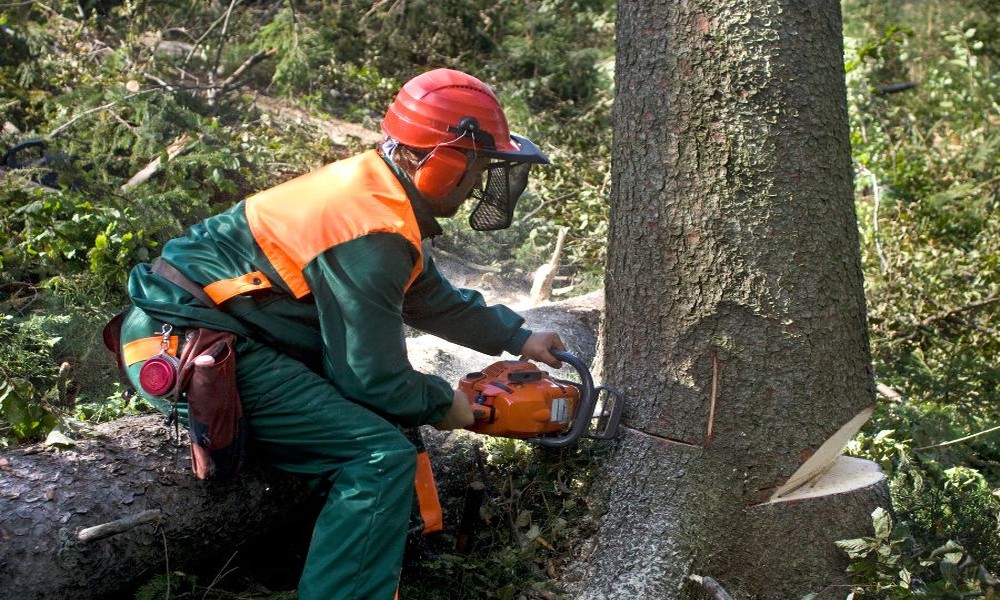
Call an arborist or tree surgeon without delay. Do not attempt to remove or stabilise a dangerous tree yourself. Professional tree surgeons carry the equipment, training, and insurance to handle high-risk removals safely.
Who Is Responsible for a Dangerous Tree?
If the tree stands on your land, the legal responsibility for it sits with you as the landowner. This includes any damage it causes to neighbouring properties, vehicles, or people. This is why acting quickly matters, not just for safety but to protect yourself from liability.
If the dangerous tree belongs to a neighbour, speak to them directly as a first step. If they refuse to act and you believe the tree poses a genuine risk, you can contact your local council. Some councils will inspect trees on private land and issue notices requiring the owner to carry out work.
Trees on council-owned land or in public spaces are the council’s responsibility. Report dangerous trees to your local authority, and keep a record of the report in case you need to refer back to it.
Does the Tree Have a Tree Preservation Order?
Even if a tree is dangerous, you may still need permission to remove it if it carries a Tree Preservation Order (TPO) or sits within a Conservation Area. Most local councils have an emergency procedure for cases where a tree presents an immediate risk to life or property. In these situations, you can carry out the minimum necessary work without prior consent, but you must notify the council in writing within five days of completing the work.
Always check with your local planning authority before proceeding, or instruct your tree surgeon to do so on your behalf. A competent arborist will know the correct procedure and can often liaise with the council.
Getting a Professional Assessment
A qualified arborist will carry out a full tree risk assessment. They look at the structural integrity of the trunk and root system, the crown condition, proximity to targets such as buildings and roads, and the likelihood and consequence of failure.
From this assessment, they will recommend one of several courses of action. This might be full removal, crown reduction to reduce wind loading, installation of bracing or cabling systems, or simply monitoring the tree over time with regular inspections.
Always use an arborist who holds a current NPTC qualification or who is a member of the Arboricultural Association. Confirm they carry public liability insurance of at least £5 million. Ask for this documentation before any work begins.
What If a Tree Has Already Fallen?
If a tree has already come down, your first priority is safety. Check for casualties, avoid any contact with power lines, and call 999 if anyone is injured or lines are down. Once the immediate danger has passed, contact your home insurance provider as soon as possible. Fallen tree damage is typically covered under buildings and contents policies, though you should check the terms of your specific policy.
Your insurer may appoint a contractor, or may ask you to obtain quotes independently. Either way, keep all receipts and take photographs of the damage before any clearance begins.
Preventing the Problem in the First Place
The most effective way to manage tree risk is through regular inspection. A professional tree survey every two to three years will catch early signs of decay, disease, or structural weakness long before a tree becomes dangerous. Trees close to buildings, in exposed positions, or on clay soils that shift seasonally deserve particular attention.
Do not wait for a tree to show obvious signs of failure. By the time the lean is visible or the soil is cracking, the risk is already significant. Early intervention is always cheaper, safer, and far less disruptive than emergency removal.
